Physical Address
304 North Cardinal St.
Dorchester Center, MA 02124
Physical Address
304 North Cardinal St.
Dorchester Center, MA 02124

The fashion world is constantly evolving and when it comes to footwear, the lines between men’s and women’s styles are increasingly blurring. The question, “Can women wear men’s shoes?“, is more relevant than ever in today’s world of individuality and practicality.
In this comprehensive guide, we will explore whether women can wear men’s shoes, how to choose the right fit, and the key factors to consider when making the switch, such as sizing differences, comfort levels, and style compatibility.
Women with wider feet often struggle to find comfortable footwear in the women’s shoe section. Men’s shoes tend to be designed with broader widths and more room in the toe box, making them a great option for women with specific foot shapes.
Men’s shoes often emphasize durability and functionality over style. This makes them a practical choice for women seeking footwear for activities such as hiking, outdoor work, or physically demanding tasks.
Fashion is increasingly becoming gender-neutral. Many women appreciate the clean lines, muted colors, and minimalist designs found in men’s shoes, which offer versatility and timeless style.
Understanding the key differences between men’s and women’s shoes is essential for ensuring comfort and performance. These differences can impact how the shoes fit and feel.
Men’s and women’s shoe sizes follow different scales. On average, women’s shoes are about 1.5 sizes smaller than men’s. Here’s an example:
Understanding size conversion is crucial when shopping for men’s shoes. Use the following table for reference:
| Women’s Size | Equivalent Men’s Size |
|---|---|
| 6 | 4.5 |
| 7 | 5.5 |
| 8 | 6.5 |
| 9 | 7.5 |
| 10 | 8.5 |
Men’s shoes are typically designed with a wider fit and a roomier toe box, making them ideal for individuals with broader feet. For women with narrower feet, this can pose challenges, as the shoes may feel loose in the heel or across the midfoot. To address this, consider adding insoles or heel grips, or look for men’s styles with adjustable laces or straps.
While men’s shoes often prioritize functionality, women’s shoes may incorporate more decorative elements and lighter materials.
Expert Tip: According to Dr. Jane Smith, a podiatrist specializing in foot health, “Men’s shoes can be a great option for women with plantar fasciitis or wide feet due to their broader fit and support structure.”

Another option gaining popularity among women is unisex shoes. These shoes are designed to be worn by any gender, making them an excellent choice for those seeking style and comfort without the limitations of gender-specific designs.
Unisex shoes combine the best of both men’s and women’s designs. They often blend the durability and comfort of men’s shoes with the versatile and sleek style that both genders can appreciate. Unisex shoes tend to have a more neutral design, which means they can appeal to a broader audience.
Fun Fact: Unisex shoes are designed to fit a broader range of foot shapes, making them a versatile choice for both men and women.
When purchasing unisex shoes, it’s important to check the sizing carefully. Typically, unisex shoes are based on men’s sizing, so women may need to order a size smaller. For instance, if you wear a women’s size 8, you would likely need a unisex size 6.5 or 7, depending on the brand.
Unisex shoes are great for casual wear, sports, and even formal settings, depending on the style. From sneakers and running shoes to boots and sandals, the unisex shoe market offers a wide variety of styles that work for everyone.
If you’re a woman considering men’s shoes, here are some tips to ensure a great fit and style:
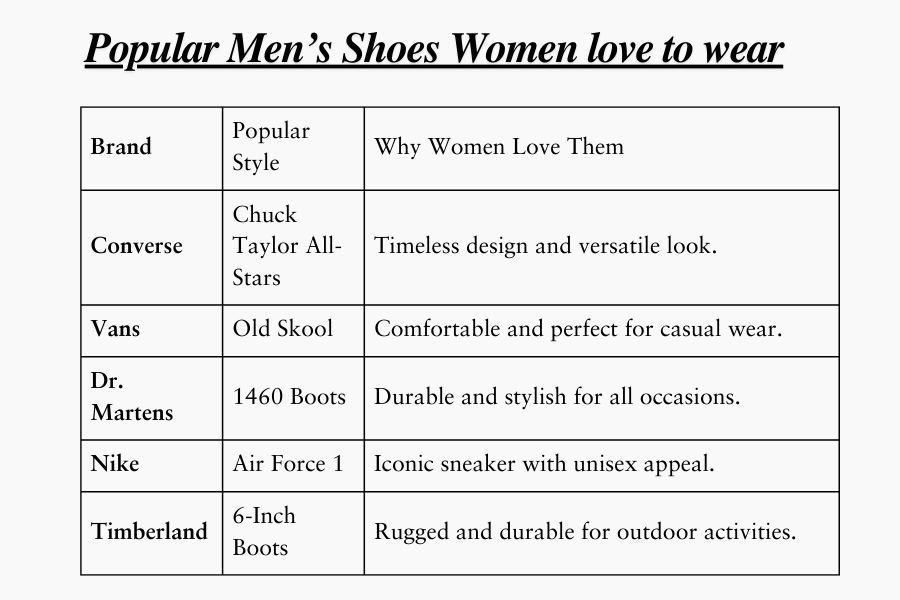
Many brands now offer unisex styles, making it easier for women to find shoes that fit their needs. Look for brands that are known for inclusivity, such as Converse, Vans, and Dr. Martens.
Men’s shoes aren’t just practical; they can also make a bold fashion statement. Here are some styling tips:
Men’s shoes are often built for rugged activities, which means they are designed to last longer and withstand wear and tear.
The broader fit of men’s shoes can accommodate orthotics or provide relief for foot issues, ensuring better comfort.
Minimalistic designs in men’s shoes offer timeless appeal that can be styled in various ways, making them versatile and easy to match with different outfits.
Women with narrow feet may find that men’s shoes are too loose, especially around the heel area.
Men’s shoes often lack the bright colors and decorative embellishments that are commonly found in women’s footwear.
Men’s shoes are generally 1.5x times heavier than women’s shoes, which could cause discomfort or fatigue for some users.

Pair men’s sneakers with skinny jeans and an oversized top for an effortless streetwear vibe.
Combine men’s loafers with tailored trousers and a blouse for a professional yet trendy appearance.
Opt for men’s hiking boots with cargo pants and a fitted jacket for rugged outdoor adventures.
Absolutely! Shoes are about comfort and functionality, and there’s no rule against choosing a style that fits you best, regardless of gender.
Subtract 1.5 from your women’s shoe size to estimate your men’s size. Always try them on or refer to the brand’s size chart for accuracy.
Yes, men’s shoes typically have a wider fit, making them a great option for women with wide feet.
Yes, many brands design running shoes with unisex appeal, and women can benefit from the fit and support provided by men’s running shoes.
Some women find that men’s shoes offer better arch support and cushioning, depending on the brand and style.
The idea of women wearing men’s shoes is not only practical but also aligns with modern trends that embrace individuality and functionality. Whether you’re seeking a better fit, enhanced durability, or a minimalist style, men’s shoes can be a valuable addition to your wardrobe. Furthermore, unisex shoes provide a great middle ground for those looking for a comfortable and stylish option that works for all genders.
By understanding sizing differences, focusing on comfort, and experimenting with different styles, women can confidently choose men’s shoes.